Sep 18, 2026Microneedling OEM & Private Label
Does ISO 10993 Cover the Complete Microneedling Device?
A U.S. buyer requested ISO 10993 reports for a micro-infusion device. Learn how to verify what was tested and what the reports do not cover.

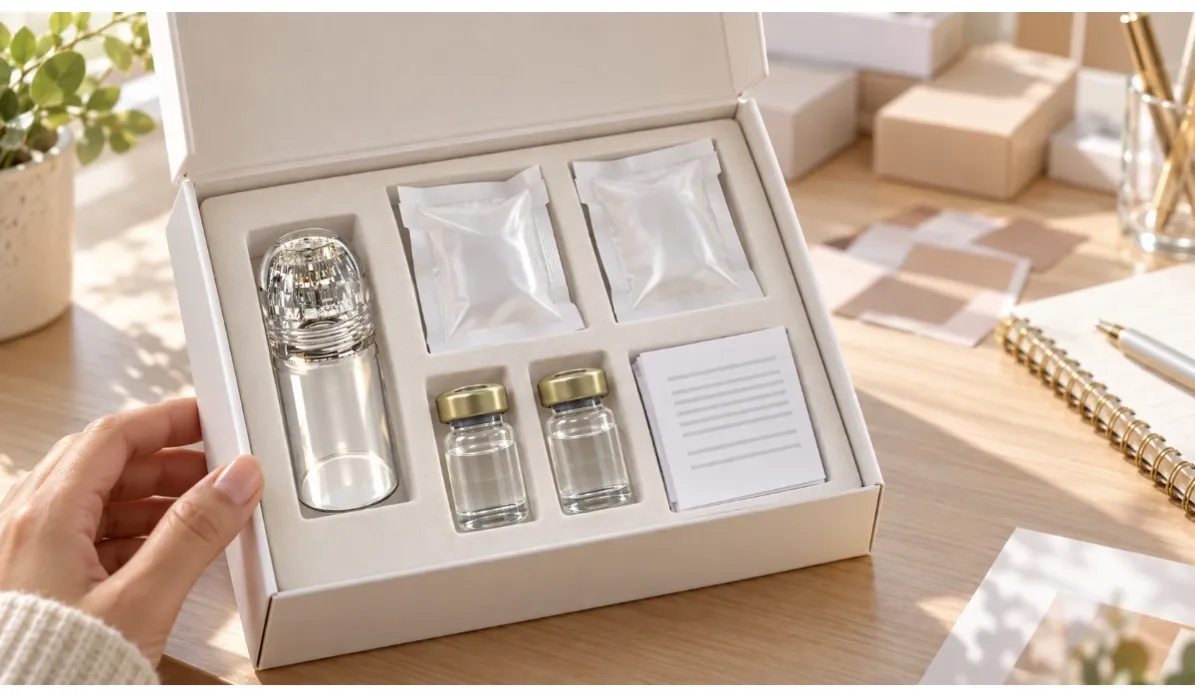
A U.S. buyer recently asked us for ISO 10993 reports while reviewing a private label micro-infusion device.
The request was reasonable. The buyer wanted to understand the needle materials, available safety evidence and documentation that could support a U.S. regulatory review.
But the most important question was not simply:
“Do you have ISO 10993?”
It was:
“What exactly was tested in each report?”
This distinction matters because an ISO 10993 report may apply to a named material or component without automatically covering the complete assembled device, its sterile packaging or the serum used with it.
What Our Available Reports Actually Identify
For the micro-infusion product discussed with the buyer, we reviewed three available biological test reports:
- In vitro cytotoxicity under ISO 10993-5
- Skin sensitization under ISO 10993-10
- Irritation under ISO 10993-23
The test article identified in these reports is:
“24K gold needle & stainless steel needle sheet”
The reports do not identify a finished retail kit or a complete assembled device model. The model and brand fields are also listed as not applicable.
One report records the submitted test article as not sterilized. Each report also states, in substance, that its results relate only to the article tested.
Therefore, the accurate description is:
Biological testing is available for the defined gold-plated needle and stainless-steel needle-sheet test article under the stated test conditions.
It would be inaccurate to turn that statement into:
The complete microneedling kit is ISO 10993 certified.
ISO 10993 is a series of biological-evaluation standards, not a single universal product certificate.
Three Reports Answer Three Different Questions
The reports should also not be treated as interchangeable.
ISO 10993-5: Cytotoxicity
The cytotoxicity report evaluates whether an extract from the defined test article shows a harmful effect on cultured cells under the report's test conditions.
Our available report uses L929 cells and an MTT method. It records 75.5% cell viability for the 100% extract and concludes that the tested article showed no potential cytotoxicity under the study conditions.
This result relates to the tested sample and method. It does not independently evaluate product sterility, packaging integrity, mechanical performance or serum safety.
ISO 10993-10: Skin Sensitization
The sensitization report evaluates the potential of the defined test article to induce skin sensitization under the stated method.
ISO describes ISO 10993-10:2021 as a procedure for assessing medical devices and their constituent materials for their potential to induce skin sensitization. That wording is important: the report must still identify which device or constituent material was evaluated. ISO 10993-10 overview
ISO 10993-23: Irritation
The irritation report evaluates the local irritation response associated with the defined test article under its stated extraction and exposure conditions.
Our available report recorded a primary irritation index of 0 and classified the response as negligible under the study conditions.
Again, this is an endpoint-specific result—not a blanket statement about every possible biological or regulatory requirement.
What These Reports Do Not Automatically Cover
Based on the test-article description, these three reports should not automatically be presented as evidence for:
- The complete assembled micro-infusion device
- The transparent reservoir or other plastic components
- Adhesives, seals or processing residues not represented in the test article
- The finished device after EO sterilization
- Sterile-barrier integrity or packaging shelf life
- EO residual levels
- A serum formula placed in the reservoir
- Every needle configuration or future product model
- A new private label version with material or process changes
- FDA clearance, approval, registration or listing
The FDA treats biological evaluation as a risk-based process for devices that directly or indirectly contact the body. Its guidance discusses the device's component materials, nature and duration of contact, test-article preparation and the use of existing information—not merely whether a supplier can provide a document with “ISO 10993” in the title. FDA ISO 10993-1 guidance
The FDA's current recognized-standard entry also describes biological evaluation within a risk-management process. FDA recognized consensus standard
How a Buyer Should Review an ISO 10993 Report
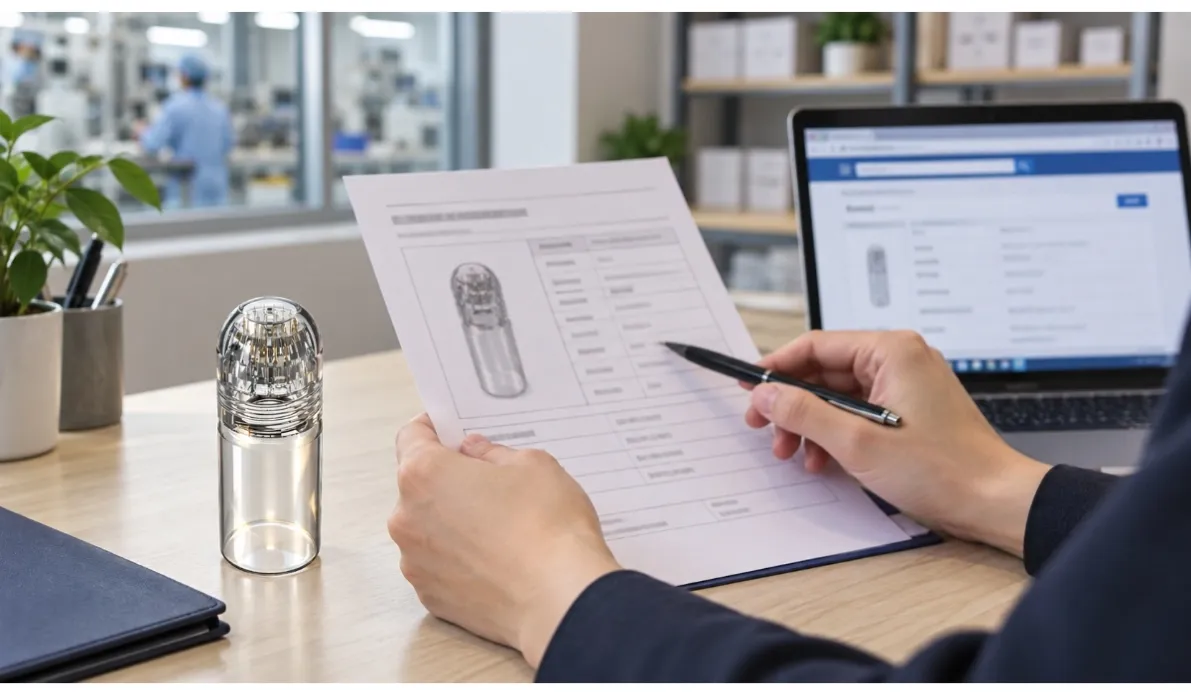
When a supplier sends an ISO 10993 report, start with the test article—not the conclusion page.
Check the following details:
- Exact test-article nameDoes the report identify a material, a component, an assembled device or a finished sterile product?
- Material and product connectionCan the supplier connect the tested article to the bill of materials, drawing or specification of the model being purchased?
- Model and brand informationIf the report says “N/A,” what other controlled document links it to the offered product?
- Sample conditionWas the article tested before or after sterilization? Was it a finished production sample or a separately prepared material specimen?
- Biological endpointDoes the report cover cytotoxicity, sensitization, irritation or another specific endpoint? One endpoint should not be described as a complete biological evaluation.
- Method and extraction conditionsReview the extraction medium, time, temperature, surface-area or mass ratio and test method. These affect what the result means.
- Report identity and validityCheck the report number, issue date, laboratory, signatures, accreditation information and page completeness.
- Internal consistencyConfirm that the test-article name, standard, method and conclusion agree throughout the report. Copying errors or unrelated wording should be clarified before relying on the document.
How We Respond to This Type of U.S. Inquiry
When a U.S. buyer asks for ISO 10993 documentation, we do not want to send three PDFs without context.
The more useful process is to:
- Confirm the exact device and needle configuration being evaluated.
- Identify the user-contacting and fluid-contacting materials.
- Map each available report to the material or component actually tested.
- Separate biological reports from sterilization, EO-residual, packaging and performance evidence.
- Record any gaps that may require additional testing or a regulatory consultant's review.
For the current micro-infusion project, the available reports support review of the named 24K gold needle and stainless-steel needle-sheet test article for the three stated endpoints.
They should be provided with that scope clearly explained.
If the U.S. customer's final evaluation requires evidence for the complete finished and sterilized device, that requirement must be assessed separately against the confirmed product configuration and intended use.
The Practical Conclusion
An ISO 10993 report is useful only when the buyer can answer four questions:
- What was tested?
- Which biological endpoint was evaluated?
- In what condition was the sample tested?
- How is that sample connected to the exact product being purchased?
For microneedling and micro-infusion sourcing, the safest description is the narrowest accurate one.
Do not call a component test a finished-device approval. Do not describe three biological endpoints as proof of every safety requirement. And do not assume that one report automatically transfers to every model, material, sterilization process or private label configuration.
If your compliance team is reviewing a micro-infusion device, send us the exact model, target market and required-document list. We can organize the available specifications, biological reports and related manufacturing records by scope, so your team can see what is available and what may still need to be assessed.
This article provides general supplier-document review information and is not legal or regulatory advice. Market requirements depend on the product's intended use, claims, classification and final configuration.