Sep 14, 2026Microneedling OEM & Private Label
A U.S. Buyer Asked Us for an FDA Certificate—What Could We Actually Provide?
A U.S. buyer requested FDA documents for a private label microneedling device. Learn why registration is not clearance and what a factory can provide.
A U.S. buyer recently asked us to provide the FDA documents for a private label microneedling device.
The request was very specific. The buyer wanted an FDA 510(k), De Novo or PMA number, the official database link, a clearance letter and confirmation that the authorization covered the exact product they were evaluating.
We could not answer this request by sending a general “FDA certificate.”
The sample under review does not currently have a 510(k), De Novo or PMA authorization that we can connect to its exact manufacturer, model and intended use.
We therefore told the buyer what we could actually provide—and what would still need to be handled as part of their U.S. regulatory project.
FDA Registration Is Not the Same as Marketing Authorization
“FDA registered” is commonly used in product quotations, but it can refer to establishment registration or device listing.
These records help FDA identify establishments and the devices associated with them. They are not automatically evidence that a particular microneedling device has received 510(k), De Novo or PMA authorization.
FDA explains that establishments involved in producing and distributing medical devices for the U.S. market may be required to register and list their devices. When a device also requires marketing authorization, the applicable premarket submission number must be provided separately. FDA: Device Registration and Listing
That is why a registration screenshot cannot replace a clearance letter for the exact product.
What Would Prove a 510(k) Claim?
If a supplier says that a microneedling device is 510(k)-cleared, the buyer should be able to verify an actual 510(k) number in the FDA database.
The public record should allow the buyer to connect the authorization to:
- The legal manufacturer
- The specific device
- The authorized intended use
- The clearance decision
- The supporting 510(k) summary
FDA describes a 510(k) as a premarket submission used to demonstrate substantial equivalence to a legally marketed device. The product cannot rely on a 510(k) claim before FDA issues the relevant substantial-equivalence order. FDA: Premarket Notification 510(k)
If the manufacturer, model or intended use does not match, the document should not be used as proof for another product simply because the devices look similar.
Our Answer to This Buyer
We did not represent the sample as FDA-cleared.
Instead, we offered to support the buyer’s evaluation with the technical documents currently available for the product.
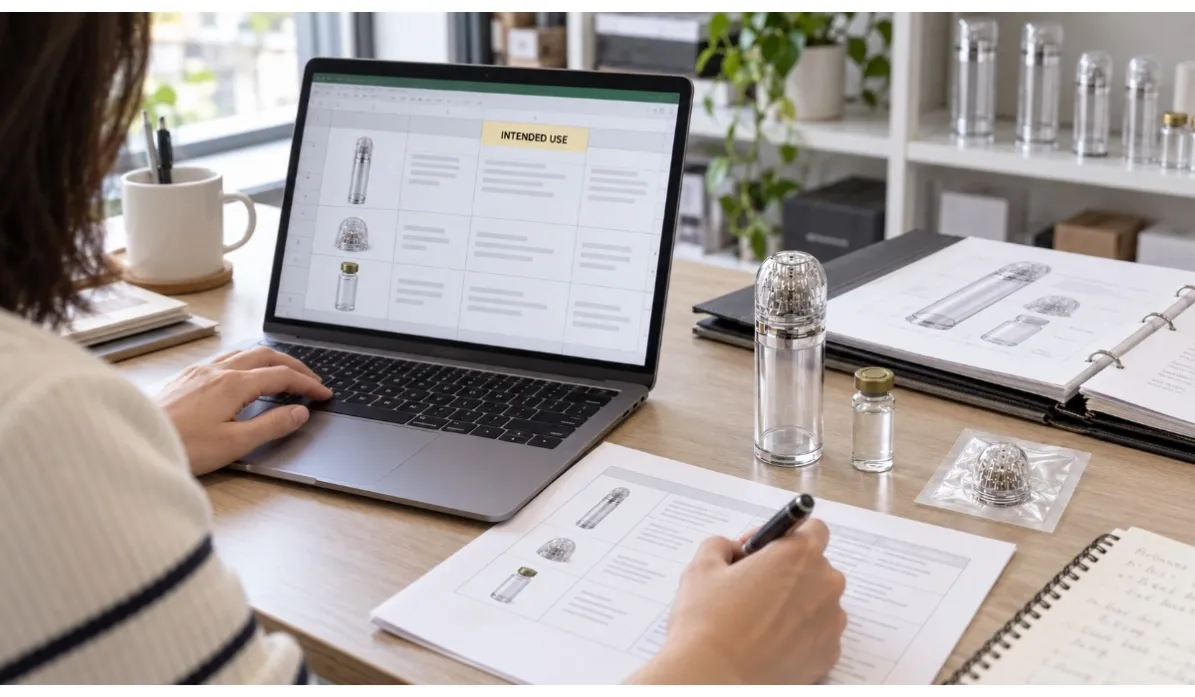
These may include product specifications, needle-material information, biocompatibility reports, sterilization documentation, quality-control records, packaging information and instructions for use.
These documents may support a regulatory review, but they are not substitutes for U.S. marketing authorization.
Several of our previous U.S. customers have worked with their own regulatory consultants or local teams to handle their U.S. applications. Our factory then cooperated by supplying the relevant product and manufacturing information.
The party responsible for a particular submission depends on how the product is manufactured, branded and introduced to the U.S. market. Buyers should confirm that structure with a qualified U.S. regulatory professional.
Why We Chose a Direct Answer
It may sound more attractive to tell a buyer that “the factory has FDA.”
But that answer creates a larger problem if the buyer later discovers that the number belongs to another company, another model or a different intended use.
For this inquiry, the professional answer was:
We can provide the available technical file and cooperate with the regulatory review, but we cannot provide an FDA authorization that does not currently exist for this exact product.
The project is still being evaluated. It has not yet become a completed order.
However, clarifying this point before quotation and private label development gives both sides a more realistic understanding of the work ahead.
One Number Is Not Enough
When evaluating an FDA claim for a microneedling device, do not ask only:
“Do you have FDA?”
Ask instead:
“What is the authorization number, which exact product does it cover, and can I verify it in the official FDA database?”
That single question is much more useful than receiving a folder full of unrelated certificates.
If you are developing a private label microneedling product for the United States, BegoSkin can first organize the available technical documents for your team’s review.
Tell us the exact model, intended use and document requirements. We will clearly identify what is available and what still requires regulatory confirmation.