Sep 28, 2026Microneedling OEM & Private Label
Can a Supplier Confirm a Micro-Infusion Kit Is Cosmetic?
A U.S. buyer requested an at-home cosmetic micro-infusion kit. Learn why its design, intended use and claims must be reviewed before classification.
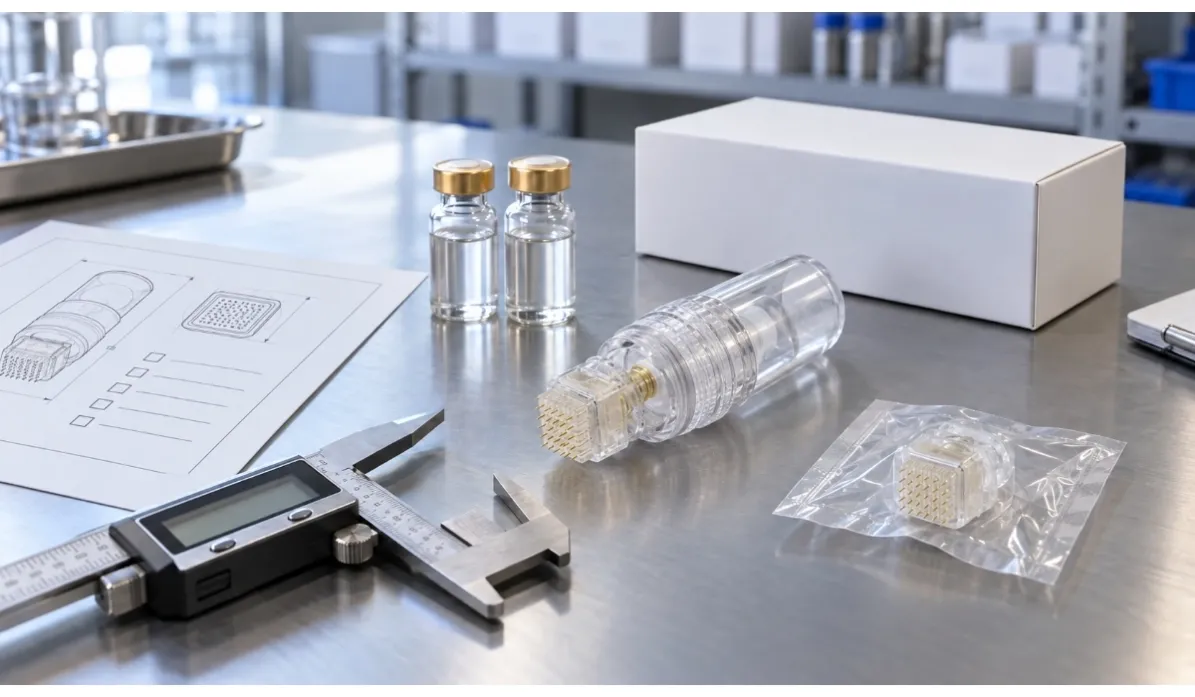
A U.S. buyer recently contacted us about a finished private label micro-infusion kit.
The brief was unusually clear. The customer wanted an at-home cosmetic product—not a medical microneedling device, a transdermal drug-delivery product or a product presented as requiring 510(k) clearance.
They asked us to confirm the applicator construction, tip protrusion, intended use and U.S. regulatory classification.
We could understand the product they wanted. But we could not confirm its classification from the word “cosmetic” alone.
A requested market position is the beginning of the review, not its conclusion.
The Product Must Match the Requested Positioning
The FDA explains that not every microneedling product is a medical device. However, it may consider the product’s design, technological characteristics, intended use and associated claims when deciding whether a product meets the device definition.
For this project, the review therefore needs to connect four things:
- The construction of the applicator and treatment tip
- How the product is intended to interact with the skin
- The directions provided to the customer
- The claims used on the box, website and advertising
If those elements do not agree, adding “for cosmetic use” to the quotation or packaging will not resolve the contradiction.
First, Identify the Exact Applicator
A catalogue photo or a general description such as “home-use model” is not enough.
The supplier should identify the exact model and provide factual information such as:
- Treatment-tip structure
- Tip material and geometry
- Protrusion dimensions and tolerance
- Whether the contact points are sharp or blunt
- Whether the head is fixed or replaceable
- The proposed operating method
This information allows the buyer’s regulatory adviser to review the product that will actually be sold—not a visually similar model.
Claims Can Change the Regulatory Question
The marketing language matters as much as the product name.
Statements about penetrating living layers of skin, treating scars, stimulating collagen, promoting wound healing or delivering active ingredients through the skin may create a very different regulatory position from limited appearance or topical skincare claims.
Consider these two descriptions:
“Supports a topical skincare routine and helps improve the appearance of skin.”
“Creates channels to deliver active ingredients below the skin surface.”
They should not be treated as interchangeable marketing options.
The brand should therefore avoid finalizing the front-of-box claims before the exact product and intended use have been reviewed.
Adding Cosmetic Serum Does Not Classify the Complete Kit
The buyer also asked about serum INCI, safety information and stability testing.
Including a cosmetic serum does not automatically make the complete device-and-serum kit a cosmetic product. The serum and applicator should first be reviewed separately.
For the serum, the buyer may need the exact INCI, product specification, cosmetic manufacturing information and available safety, microbiological and stability information.
For the applicator, the relevant information concerns its design, materials, intended use and instructions.
The finished packaging must then describe the two components consistently and avoid implying an unsupported delivery method. Our microneedling intended-use matrix explains this component-by-component approach.
What Can a Supplier Confirm?
A supplier can provide factual information about the selected product, including:
- Model and construction
- Tip specifications and materials
- Available manufacturing certificates and test reports
- Sterilization scope, where applicable
- Instructions for use
- Serum INCI and available cosmetic documents
- Packaging configuration
These documents support the buyer’s assessment.
They should not be replaced by a generic letter stating that every version is “a cosmetic product for the United States.” A meaningful review must refer to the exact product, instructions and claims.
What Must the Brand Confirm?
Before customized packaging is printed, the brand should confirm:
- The exact applicator model
- The intended user and operating method
- How the treatment tip is expected to interact with the skin
- The instructions and warnings
- The claims used across packaging and online marketing
- Who will complete the final U.S. regulatory assessment
These decisions should be recorded in one approved specification.
They also affect which product should be quoted. That is why we first clarify the buyer’s sales channel, brand position and intended customer. See why we ask about sales channels before quoting a micro-infusion kit.
Where This Inquiry Stands
This project is still at the product-definition stage.
We have not issued a blanket cosmetic-classification statement or claimed that a regulatory pathway has already been confirmed. The next step is to match the requested positioning with a specific applicator, intended use, serum concept and packaging direction.
We can then organize the available product information for the buyer’s U.S. review and prepare a targeted quotation and sample plan.
If you are planning an at-home micro-infusion kit, send us your intended market, sales channel, proposed claims and expected configuration.