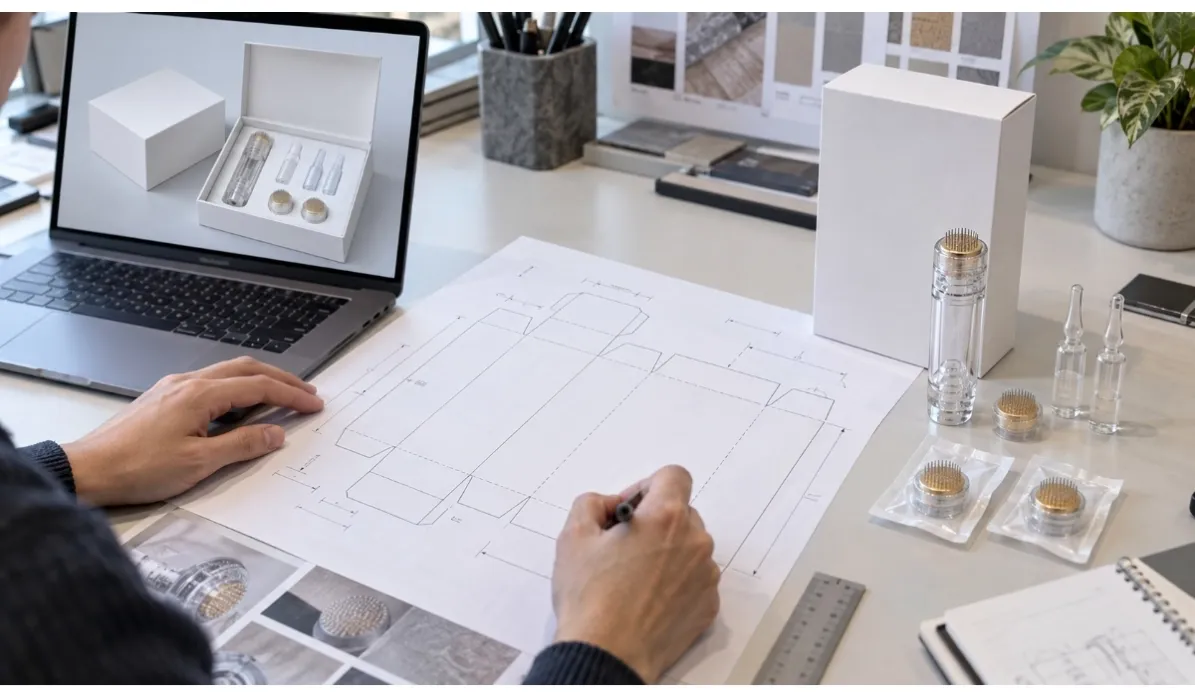
Sep 25, 2026Microneedling OEM & Private Label
Why We Ask About Sales Channels Before Quoting a Micro-Infusion Kit
A U.S. buyer requested a finished private label micro-infusion kit. See why we clarified the sales channel, brand positioning and target customer before quoting.
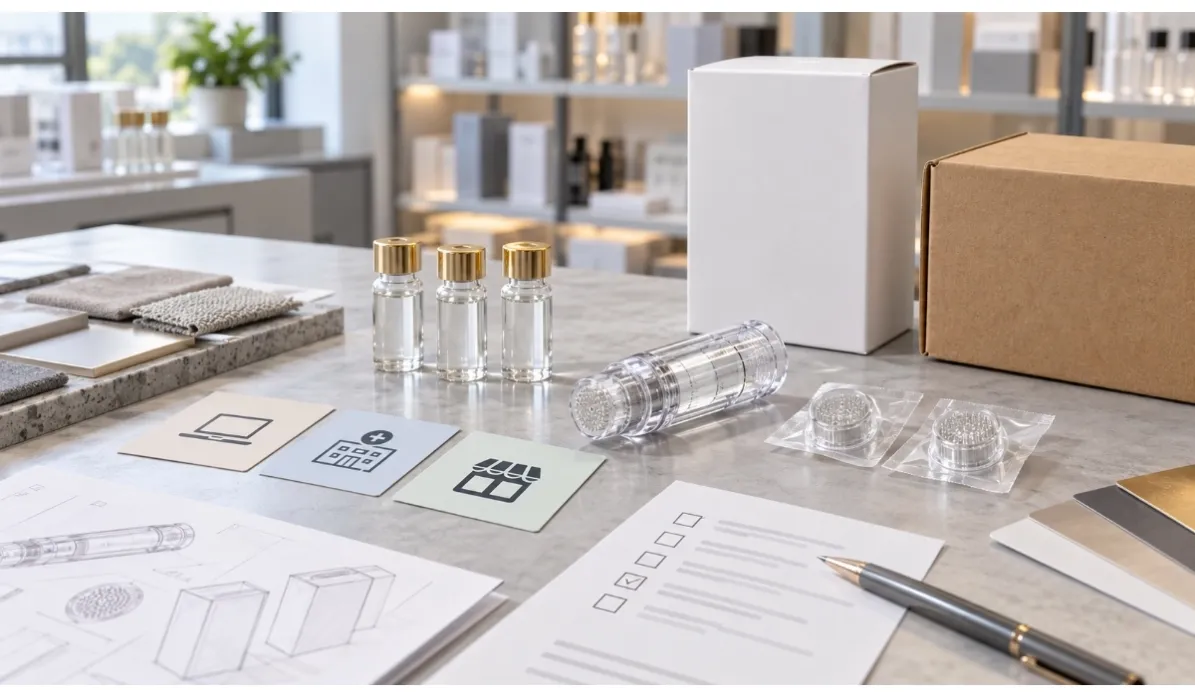
A prospective customer recently contacted us about developing a finished private label micro-infusion kit for sale in the United States.
The inquiry was detailed. The customer described the desired product as an at-home cosmetic kit and asked about the applicator construction, tip dimensions, intended use, U.S. regulatory positioning, manufacturing documents, serum INCI, safety information, packaging support and our ability to supply the complete finished kit.
It would have been easy to reply with a catalogue and a price table.
We did not do that.
Before recommending a model or quoting a complete kit, we first needed to understand how the brand planned to sell the product, where it wanted to position itself and who it expected to buy the kit.
That information changes the solution.
A Detailed Product List Is Not Yet a Product Strategy
Two brands can request the same basic items—one applicator, several treatment heads, serum ampoules and a retail box—but need very different finished products.
A direct-to-consumer skincare brand may place greater importance on a simple routine, clear unboxing and parcel-ready protection. A clinic or spa selling the kit to existing customers may need stronger staff education and a practical refill structure. A marketplace seller must think carefully about package size, listing consistency and fulfilment handling. A distributor may require a configuration that can be adapted to several customers or channels.
The parts inside the box may look similar, but the commercial requirements are not.
Without knowing the sales channel, a supplier may quote a kit that is technically possible but commercially unsuitable.
Brand Positioning Changes the Configuration
“Private label micro-infusion kit” can describe anything from an accessible starter product to a premium skincare system.
For an entry-level launch, a brand may prefer one straightforward device, a limited number of individually packed heads and a compact box. A premium brand may place more emphasis on surface finish, a fitted insert, a longer skincare routine and a separate refill concept.
The target retail price matters as well. It influences how much room the project has for the device finish, serum quantity, packaging structure and individual shipping protection.
This is why we did not begin by asking only, “How many pieces do you need?”
We first needed to understand:
- Whether the customer already operates a beauty brand or is preparing a new launch
- Whether the kit will be sold through the brand’s own website, marketplaces, clinics, retailers or distributors
- Who the intended customer is and how familiar that customer is with the product category
- The intended retail position and approximate target price
- Whether the business model focuses on a starter kit, refills or both
- Which market and launch stage the quotation must support
These questions are not a delay before quotation. They are part of preparing the right quotation.
The Requested Positioning Must Match the Actual Product
The customer was clear that they wanted an at-home cosmetic product rather than a medical microneedling device. They also requested information about tip protrusion, intended use and U.S. regulatory classification.
We treated this as a requirement to be reviewed—not as a classification that could be confirmed from one message.
For a U.S. project, the physical construction, intended use, instructions, product claims and the way the kit is marketed need to be considered together. Calling a product “cosmetic” does not by itself settle how the finished product will be viewed.
That is why the commercial discussion and the product-document discussion cannot be separated completely. Before finalizing the configuration, the brand needs to define what it plans to say about the product and obtain appropriate market-specific regulatory advice where necessary.
Our role at this stage is to provide accurate information about the selected model and available manufacturing documents. We should not promise that a requested marketing position is automatically supported before the exact product and claims are reviewed.
For projects that need this information organized component by component, our article on the microneedling intended-use matrix explains a practical way to connect the device, head, serum, instructions and packaging with the relevant information.
We Quote the Selected System, Not a Generic Product
Once the customer’s channel, positioning and audience are clearer, we can narrow the project to a realistic configuration.
That may involve deciding:
- Which applicator structure is suitable for the proposed product concept
- Whether the device body is reusable and how replacement heads will be supplied
- Whether serum belongs in the first kit or should be evaluated separately
- How many heads and ampoules make sense for the planned routine
- Whether the brand needs a starter kit, refill packs or both
- What type of box, insert, instructions and protective shipping packaging are required
- Which technical and manufacturing documents apply to the selected components
Only then can the quotation describe the same product the customer is actually planning to sell.
For buyers still defining the first retail format, what a first micro-infusion starter kit should include is a useful next reference. It explains why a manageable first configuration can provide clearer market feedback than an oversized kit.
The Next Step Is a Purposeful Sample, Not Just Any Sample
After the proposed configuration and quotation are reviewed, the project can move to sample testing.
The sample should represent the direction under consideration. It should help the buyer evaluate the device structure, assembly, dispensing, component fit and overall retail experience—not simply confirm that a physical product arrived.
The exact customized box may come later if the first task is to validate the device and serum combination. If the packaging structure is central to the concept, it may need to be included earlier.
The testing plan therefore follows the product strategy. Our microneedling sample quality checklist outlines the points a buyer can record once the sample configuration has been selected.
Where This Project Stands
This inquiry is still at the discovery stage.
We have not yet issued a final kit quotation, confirmed a regulatory pathway or claimed that the customer has approved a model. The next step is to understand the brand’s sales channel, positioning, target audience and commercial expectations well enough to recommend a suitable configuration.
After that, we can provide a targeted proposal, identify the information available for the selected components and prepare the appropriate samples for evaluation.
This may take longer than sending an instant price list, but it reduces a more expensive risk: developing the wrong kit for the brand’s actual market.
Planning a Private Label Micro-Infusion Kit?
To receive a more relevant proposal, tell us:
- Your target market and sales channel
- Your existing brand position or launch concept
- Your intended customer
- Your target retail price range
- The components you expect in the kit
- Whether you plan to sell replacement heads or serum refills
BegoSkin can then review the project context, recommend a practical starting configuration and prepare the corresponding quotation and sample plan.