Sep 1, 2026Microneedling OEM & Private Label
Why We Ask How a Buyer Will Use a Microneedling Sample Before Shipping It
Before shipping two E24 devices and three serum samples to a US aesthetics business, we first clarified how the products would fit its business.
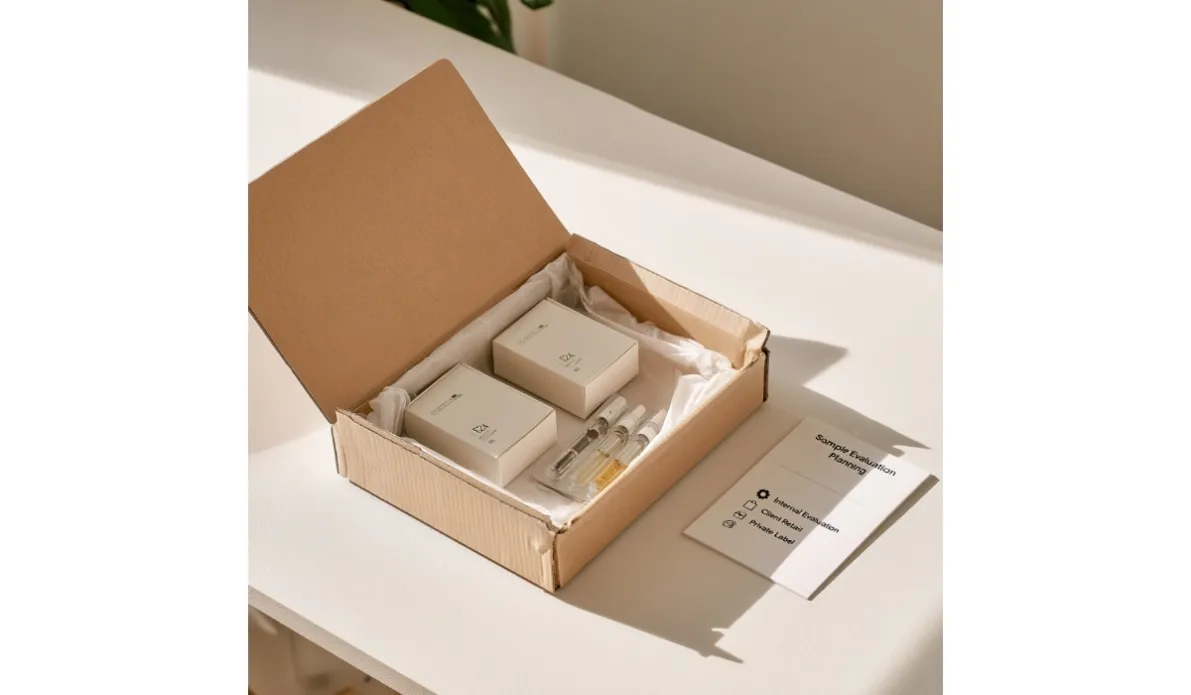
We were preparing a sample proposal for a US aesthetics business: two E24 micro-infusion devices and three serum ampoule samples.
The products were selected. The sample policy had been explained. We could have moved directly to confirming the delivery address.
Instead, we paused and asked one more question:
How do you see the E24 fitting into your business?
The answer would determine what the client needed to evaluate—not only what we should place inside the courier parcel.
The Same Sample Can Serve Three Different Purposes
We gave the client three simple options:
- Evaluate the device within the existing aesthetics business
- Retail it to existing clients as a home-care product
- Explore a branded home-care kit
The client could choose one option or a combination.
At first glance, all three routes could begin with the same E24 device. But the testing priorities would be different.
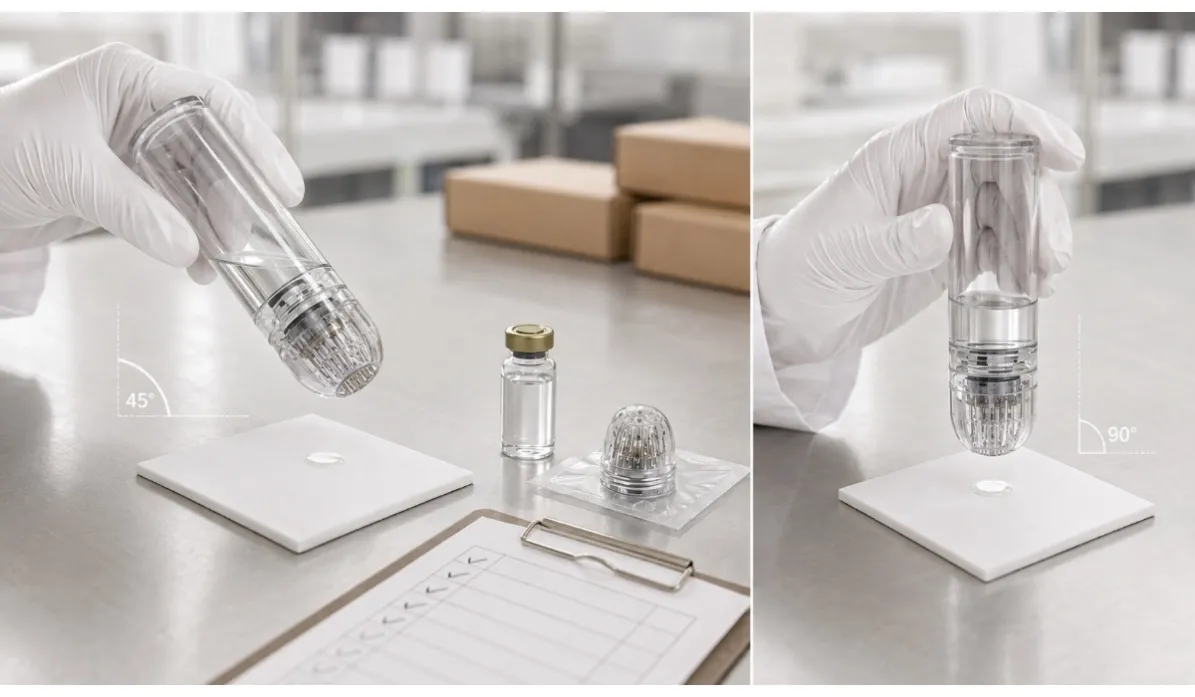
A business evaluating the device internally may focus on handling, assembly and serum dispensing.
A business considering retail needs to think about whether its clients can understand the product, replacement-head requirements and instructions.
A brand-development project introduces further questions about packaging, kit contents, logo application and order quantity.
Without knowing the intended route, a supplier may send several products but still fail to provide a useful sample.
Route One: Evaluating the Device
If the sample is mainly for initial product evaluation, the first objective is to understand the device itself.
The buyer may examine:
- Device structure and finish
- Needle-head specification
- Assembly and replacement
- Serum dispensing
- Formula compatibility
- Sealing and leakage
- Handling during a controlled evaluation
At this stage, customized packaging is not the priority.
The buyer needs enough product to repeat the test and compare the results. This was one reason for proposing two E24 devices rather than sending only one unit.
If one sample is opened for an initial inspection, the second remains available for another controlled evaluation or internal review.
Route Two: Retailing to Existing Clients
The second route changes the questions.
An aesthetics business may already have trusted clients who want a convenient home-care product between appointments. In that case, the buyer is not only evaluating whether the device works.
The business also needs to consider:
- Whether the product is easy to explain
- What the customer will receive
- How replacement heads are supplied
- Whether serum will be sold with the device
- What instructions and cautions are required
- How the product should be positioned for home care
- Whether the expected retail price fits existing clients
A technically acceptable sample can still be unsuitable for retail if the customer experience is confusing.
The buyer should therefore test the product as a first-time user might see it, not only as an experienced aesthetics professional.
Route Three: Developing a Branded Home-Care Product
The third route is a private label project.
Here, the sample helps confirm the core product before the brand invests in customized packaging.
The buyer may eventually want:
- Logo application on the device
- Branded serum ampoules
- Replacement needle heads
- A customized inner tray
- A retail box
- Instructions matching the selected model
- Protective shipping packaging
But the first courier parcel is not necessarily a finished branded kit.
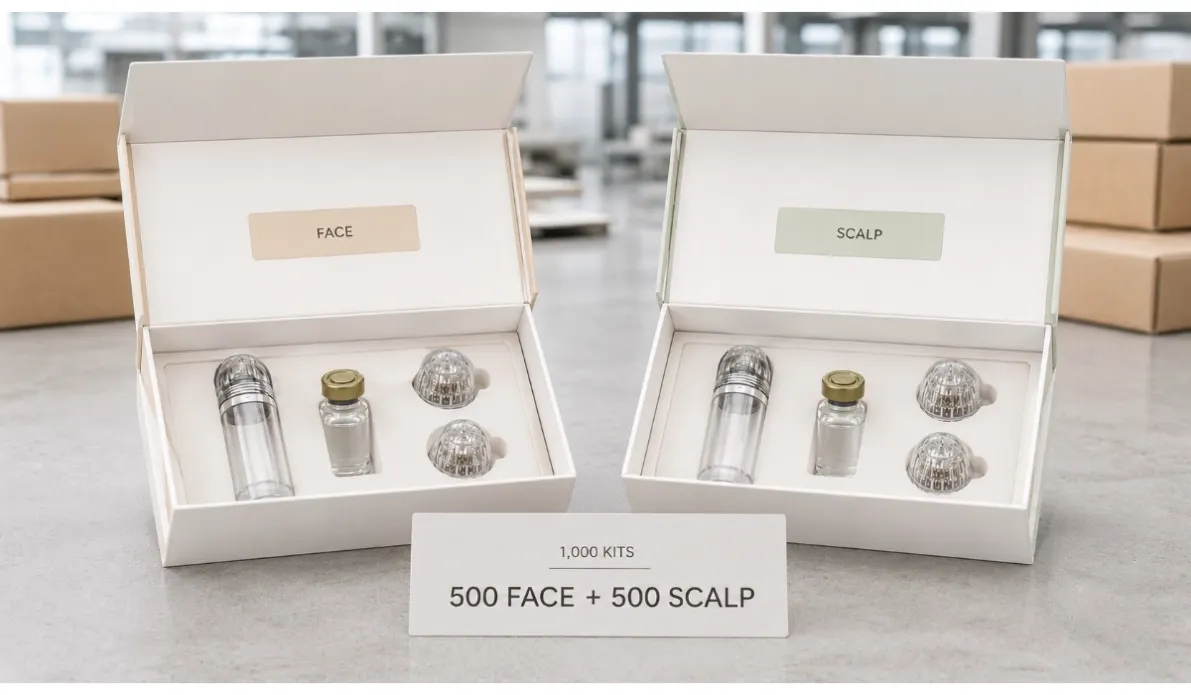
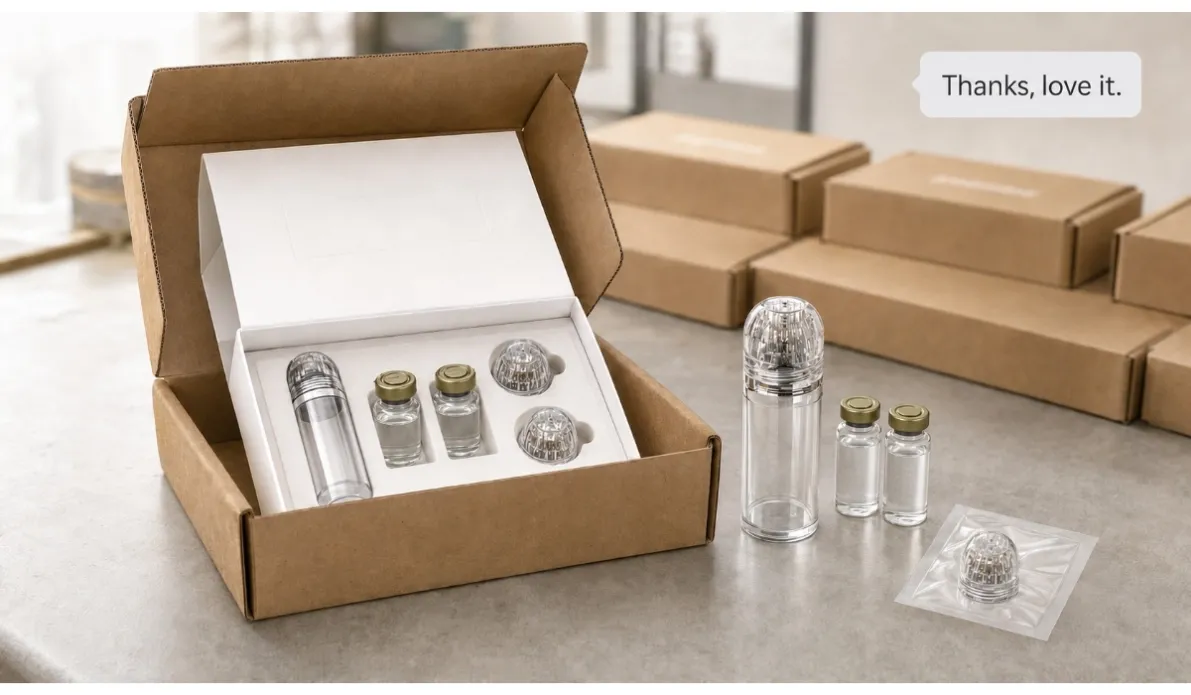
For this project, the proposed samples were neutral products. The devices and ampoules would be supplied in their individual small white boxes or sealed packaging where applicable.
They should not be described as a complete retail kit.
A digital branded packaging mockup can help the client visualize the future product, but it remains a design concept until the specifications, packaging structure and artwork are confirmed.
This distinction prevents a common misunderstanding: approving a device sample is not the same as approving the final retail package.
Why We Proposed Two Devices and Three Serum Samples
The purpose was not to make the parcel look more generous.
Two devices allow the buyer to carry out more than one evaluation without relying on an already-opened sample.
Three serum options create an opportunity to compare the planned formulas with the device rather than evaluating the tool in isolation.
During testing, the buyer can observe whether different formulas affect:
- How quickly dispensing begins
- Flow consistency
- Residue inside the bottle
- Ease of controlled application
- Compatibility with the device structure
The buyer does not need to select a final serum solely from the ingredient name or marketing description. Actual device-and-formula compatibility matters.
A Free Sample Still Needs a Clear Testing Plan
For this client, the proposed product samples were free. The USD50 international courier charge could be credited toward the first order.
That arrangement gives both sides a reason to treat the sample seriously.
The supplier prepares suitable products and provides technical support. The buyer covers the initial international delivery and provides specific testing feedback.
Before shipping, both sides should know what the next useful result will be.
It may be:
- Confirmation that the E24 model is suitable
- Selection of a preferred serum
- Feedback about the needle-head configuration
- Interest in a small retail test
- A request to begin private label packaging development
“Sample received” is not the end of the process. It is only the beginning of the evaluation.
What This Real Inquiry Reminded Us
When a buyer says, “Yes, I would like a sample,” it is tempting to pack the most popular product immediately.
But “interested in a sample” does not yet explain the business opportunity.
The more useful question is:
What decision should this sample help the buyer make?
In this case, asking whether the E24 was intended for internal evaluation, client retail or private label development helped turn a general sample request into a clearer project conversation.
The sample discussion is still progressing, so we are not presenting it as a completed order.
Its value is in the planning: two devices and three serum samples can be much more useful when both sides understand what they are supposed to prove.
Planning a Microneedling Sample Evaluation?
Tell us how you plan to introduce the product—internal evaluation, home-care retail or private label development.
BegoSkin can then recommend a more relevant device-and-serum sample configuration instead of sending unrelated models.